
Sections
- What commercial work is common here?
- How is a commercial job planned?
- Which metals suit commercial roofs?
- What about stormwater rules?
- Who handles commercial gutters?
- How is commercial work priced?
- Buildings served
- Box gutters and scuppers
- Working around a business
- Maintenance plans
- Drainage and stormwater
- What to have ready for a commercial quote
- Metal roofs
- Safety on tall buildings
- Older commercial buildings
- Commercial vocabulary
What commercial work is common here?
Steel box gutters on metal shops and warehouses, scuppers and conductor heads on flat-roofed retail and offices, large K-style on apartment and condo buildings, and repairs where vans and equipment have flattened leaders.
| Building | Typical system | Typical trouble |
|---|---|---|
| Flat-roof retail or office | Scuppers, conductor heads, big leaders | Blocked scuppers, ponding |
| Metal shop or warehouse | Steel box gutters, 4x5 leaders | Seam and expansion joint failures |
| Apartment or condo buildings | 6-inch K-style with 3x4 leaders | Very long runs, needles from planted firs |
| Church or school | A mix of K-style, half-round and box | Tall walls, steep pitches, tricky access |
| Waterfront business | Aluminum or copper, sealed fixings | Salt air, wind exposure |
| Restaurant | Gutters over walkways | Drips on customers, grease on roofs |
How is a commercial job planned?
- Survey the roof. Area, slope, drainage points and existing scuppers.
- Size the system. Gutter and leader capacity matched to roof area.
- Plan access. Lifts, scaffold or roof work, and how customers and staff move around.
- Make the parts. Box gutters and conductor heads are often bent up in a shop to suit.
- Install and seal. Expansion joints on long runs.
- Connect drainage. To on-site systems according to local rules.
Which metals suit commercial roofs?
| Metal | Strength | Watch for |
|---|---|---|
| Heavy aluminum | Light, no rust, many colors | Dents from equipment |
| Galvalume or galvanized steel | Rigid; right for box gutters and metal roofing | Cut edges rusting; sea air |
| Copper | Long life, traditional look | Cost; keep away from steel |
| Stainless | Very durable | Price and lead time |
What about stormwater rules?
The City of Gig Harbor runs a stormwater utility and publishes a stormwater manual that covers roof downspout controls for development. Commercial roof drainage usually connects to on-site systems designed under those rules, so check with the city or county before changing where downspouts discharge.
Who handles commercial gutters?
A number of residential gutter firms will do lighter commercial jobs such as small apartment buildings and shops. Big box gutters and scupper work usually goes to sheet metal fabricators or commercial roofers. Whoever does it should hold a Washington L&I registration.
How is commercial work priced?
It varies too much for a per-foot figure. Height, access, fabrication and working hours drive the price. Ask for a written scope with photos.
Larger sites often sign maintenance agreements, with a visit after the autumn needle drop and another before spring, so scuppers and drops never get a chance to block.
Buildings served
| Building | Common gutter work |
|---|---|
| Retail and offices in Gig Harbor North | Large K-style, box gutters, scuppers |
| Harbor-front businesses | Older box gutters, salt exposure, tightlines |
| Churches and halls | Tall eaves, copper or half-round |
| Apartment and condo buildings | Long runs, many leaders, guard programs |
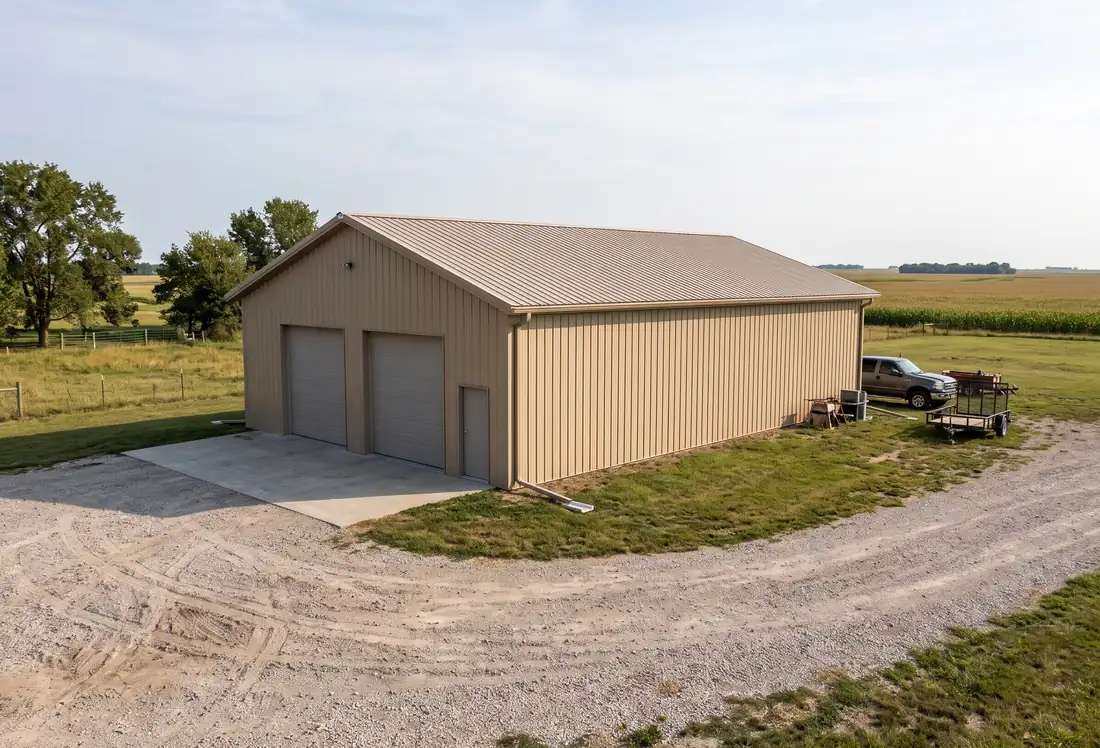
| Shops, barns and agricultural buildings | Steel box gutters, big leaders |
| Marinas and boat sheds | Metal roofs, corrosion-resistant materials |
Box gutters and scuppers
Flat and low-slope commercial roofs often drain through scuppers, openings in the parapet wall, into collector heads and large leaders. Steel box gutters on metal buildings carry far more water than residential profiles. These systems need joints sealed, collector heads clear and leaders sized for the roof area.
Working around a business
Commercial work often has to be planned around opening hours, customer access and parking. Lifts may be needed for tall walls, and some jobs are split over several days. Tell the contractor about any access limits when you call.
Maintenance plans
For larger buildings and properties under conifers, a regular inspection and cleaning schedule catches problems before they leak into ceilings. Ask whether the contractor offers a recurring visit and what it includes.
Drainage and stormwater
Commercial properties inside the city may have stormwater requirements. The City of Gig Harbor's stormwater program is the place to check what applies before changing where leaders discharge.
What to have ready for a commercial quote
- Building plans or roof dimensions if available.
- Photos of problem areas, especially from inside where leaks show.
- Access details: parking, loading areas, opening hours and any restrictions.
- Who approves the work: owner, property manager or association.
- Any stormwater requirements you have been told about.
Metal roofs
Many shops, barns and commercial buildings on the peninsula have standing-seam or corrugated metal roofs. Snow and rain slide off them fast, so gutters need to be sized and positioned to catch that flow, and leaders sized to carry it.
Safety on tall buildings
Work on tall commercial walls often needs lifts, fall protection and traffic control around entrances. These add to cost and planning time, so share building height and access details early. For multi-storey apartment and condo buildings, the contractor may need to coordinate with the property manager so residents know when crews and equipment will be on site, and parking areas may need to be kept clear on work days.
Older commercial buildings
Harbor-front buildings and older halls may have built-in box gutters lined with metal inside the roof edge. These can leak into walls when linings fail. Repairs often mean relining rather than replacing, and they are worth inspecting before the wet season.
Commercial vocabulary
| Word | What it means for a peninsula house |
|---|---|
| Box gutter | A deep, square-section gutter, often steel or copper, on larger or commercial roofs |
| Scupper | A slot cut through a low roof wall so a flat roof can drain |
| Collector head | A funnel-shaped box heading a leader, fed by a parapet opening or by two gutters meeting |
| Expansion joint | A slip joint in a long run that allows the metal to grow and shrink |
| Gauge | How thick the metal is: 0.027 or 0.032 inch in aluminum, 16 or 20 ounce in copper |
| Downspout | The pipe carrying water from the gutter outlet to the ground; also called a leader |