
Sections
- How often should gutters be cleaned here?
- What does a full clean include?
- Why do peninsula gutters fill so quickly?
- When is the best time to book?
- Should you clean your own gutters?
- Who can clean gutters?
- How much does cleaning cost?
- Does cleaning help gutters last?
- A cleaning calendar for peninsula homes
- What a cleaning visit covers
- Doing it yourself
- Registration
- What to watch between cleanings
- Cleaning and guards together
- Booking ahead
- Cleaning vocabulary
How often should gutters be cleaned here?
At least once a year, usually in late fall after the bigleaf maples drop and before the wettest weeks. Under heavy conifers, twice is common, and some homes need a spring visit as well once alder catkins and pollen have fallen.
| Trees over the roof | Cleans a year | Timing |
|---|---|---|
| Douglas fir or cedar close overhead | 2 to 3 | Late fall, early spring, late summer check |
| Mixed firs and maples | 2 | November and March |
| Bigleaf maple or alder only | 1 to 2 | After leaf fall, spring look |
| Hardly any trees | 1 | Late fall |
| Micro-mesh fitted | Brush 1 to 2 times | After spring and after fall |
What does a full clean include?
| Task | Why it matters |
|---|---|
| Debris lifted out by hand and bagged | No mess blown into beds or onto the neighbors |
| Outlets cleared | The place blockages start |
| Leaders flushed | A clean trough still spills if the pipe is plugged |
| Buried lines and tightlines tested | Confirms water reaches the outfall |
| Hangers, seams and fascia checked | Small faults spotted while the gutter is empty |
| Pictures of any faults | Shows you exactly what needs work |
| Roof valleys cleared where safe | Stops needles washing down later |
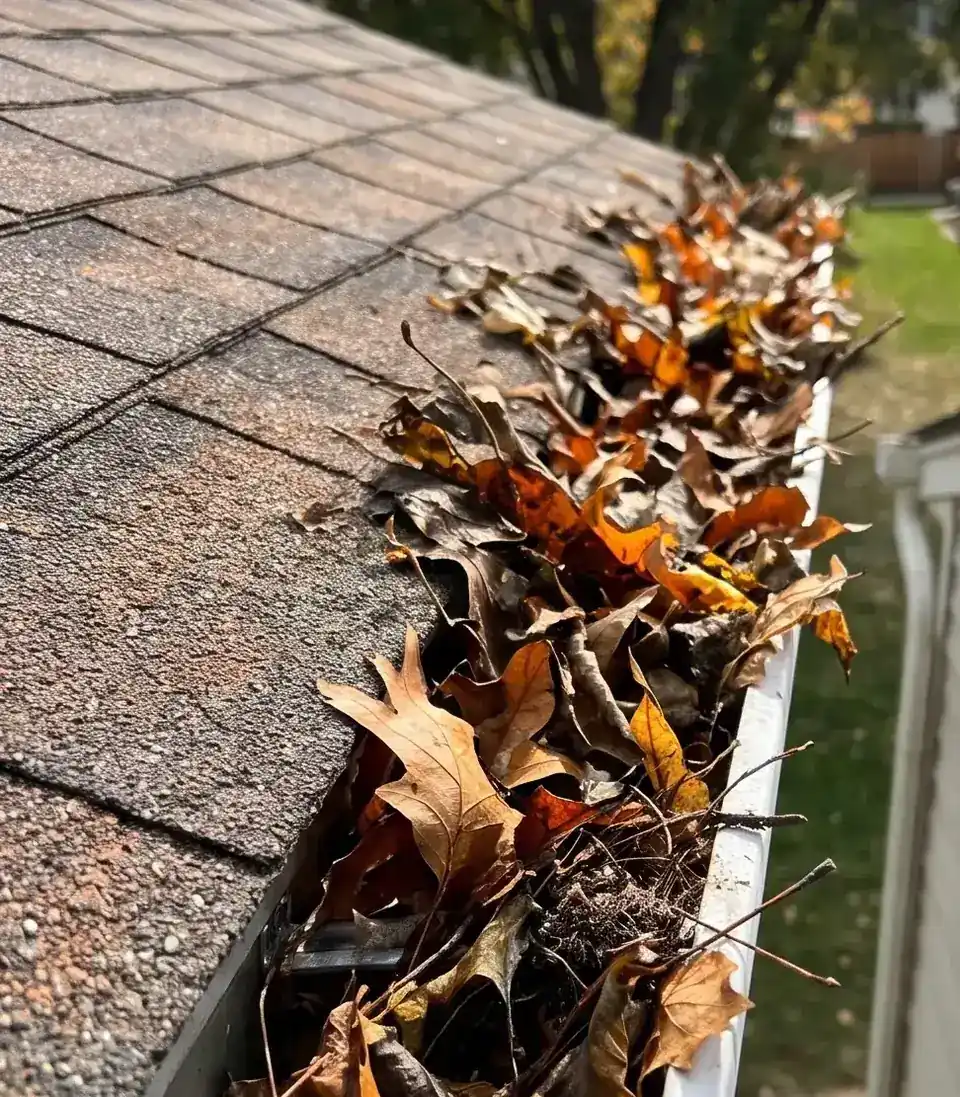
Why do peninsula gutters fill so quickly?
Conifers shed constantly. Firs and cedars drop needles all year, heavier in fall and after wind.
Moss. Shaded roofs grow moss, and clumps wash into the gutter where they keep debris wet.
Cones and twigs. Storms bring down small branches and cones that jam outlets.
Long rain. With about 37 inches of rain a year, with December the wettest month, a blocked outlet has many weeks in which to overflow.
When is the best time to book?
Late October to December for the main clean, once maple leaves are down. Booking early in the season helps, because contractors fill up after leaf fall and again after the first big windstorm.
Should you clean your own gutters?
From a steady ladder on firm, level ground at a one-level house, many people manage it. Two-level homes, steep lots and wet, mossy roofs are another matter. Never clean gutters in rain or wind, never lean a ladder on the gutter, and keep three points of contact.
Who can clean gutters?
L&I lists gutter cleaning among services that do not require contractor registration. That means a cleaner may not have an L&I number, so ask directly about liability insurance. Any repair work found during the clean should go to a registered contractor.
How much does cleaning cost?
Footage, height, how packed the troughs are and whether guards must be lifted all affect it. No local rate is published, so ask what you are paying for: debris removed by hand, leaders flushed, buried pipe tested and waste taken away.
Does cleaning help gutters last?
It does. Soggy debris keeps the metal wet, loads the hangers and soaks the trim. Keeping troughs clear means they drain, the fixings stay tight and the wood dries out.
A cleaning calendar for peninsula homes
| Season | What lands in gutters | Suggested action |
|---|---|---|
| Late autumn | Maple and alder leaves, cones, needles | Main cleaning after the leaf drop |
| Winter | Storm debris, moss | Check after big storms |
| Spring | Catkins, seeds, moss, needles | Second cleaning under trees |
| Summer | Needles in dry spells | Look over before autumn rain |
What a cleaning visit covers
A typical visit clears debris from every gutter by hand or with a scoop, flushes each outlet and leader to check flow, and bags or removes the waste. Many cleaners will also point out loose hangers, leaking joints and sags they notice, which is useful even if you book the repair separately.
Doing it yourself
On a single-level rambler with an open sky, cleaning from a sturdy ladder is manageable for many homeowners. On two-level eaves, slopes and roofs above banks, the ladder work is far riskier. If you do it yourself, work from a properly placed ladder, never lean on the gutter, and avoid wet or windy days.
Registration
L&I's guidance lists gutter cleaning on its own among work that does not need contractor registration. If the cleaner also offers repairs, ask about registration for that part of the work and check it on L&I's Verify a Contractor tool.
What to watch between cleanings
During a heavy rain, look for water spilling over the front of the gutter, leaders that are not flowing, and plants growing in the trough. Any of these means the gutter needs attention before the next cleaning date.
Cleaning and guards together
If cleaning is a frequent expense, ask the cleaner or a gutter contractor for a guard quote too. Comparing the yearly cleaning cost with the one-time guard cost helps you decide.
Booking ahead
Cleaners are busiest in November after the leaf drop. Booking a date in advance, or choosing a spring cleaning slot, often means shorter waits.
Cleaning vocabulary
| Word | What it means for a peninsula house |
|---|---|
| Outlet | The sleeve sealed through the gutter bottom where water leaves for the leader |
| Elbow | A bent downspout fitting that turns the pipe toward the wall, away from it or sideways |
| Downspout | The pipe carrying water from the gutter outlet to the ground; also called a leader |
| Cleanout | An access point with a cap, at the base of a leader feeding underground pipe, for clearing blockages |
| Tightline | A sealed, solid pipe that carries roof water to a chosen outlet, often down a slope or bluff |
| Micro-mesh | Woven stainless screening with tiny openings, carried on a rigid frame over the trough |
| Moss | Low green growth that colonizes damp, shaded roofs and sheds clumps into gutters |