
Sections
Two boards worth knowing
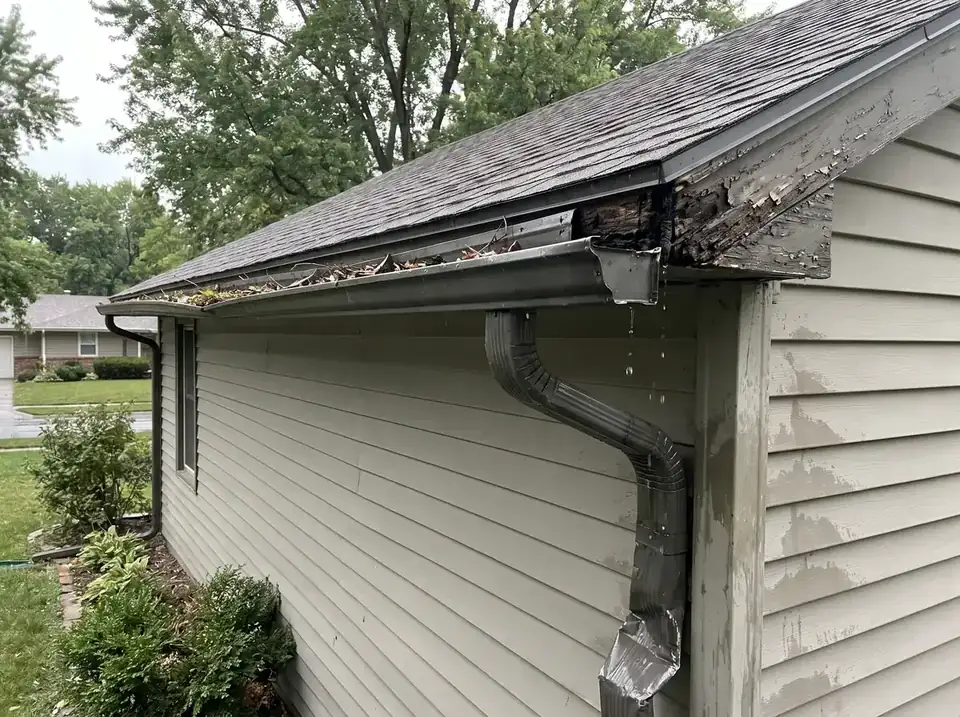
Fascia caps the ends of the roof rafters along each eave, and the gutter fixings go into it. Soffit is the panel tucked under the overhang, running back to the house wall. When a gutter leaks, spills or sits too low, these are the parts that pay.
| Part | Usually made of | What goes wrong |
|---|---|---|
| Fascia | Fir or pine (painted), cedar, PVC, fiber cement, metal cladding | Decay, peeling, cracked ends |
| Soffit | Vented vinyl, aluminum, painted plywood | Sagging, rotten edges, animals getting in |
| Roof-edge flashing | Aluminum or galvanized | Missing, or stops short of the trough |
| Rafter ends | Framing lumber | Rot after years of wet fascia |
Swapping a rotten board
- The gutter comes down carefully, to be rehung or replaced
- The board is probed along its length and into the rafter ends
- Soft wood is cut back until the saw meets sound timber
- Rafter ends are sistered or replaced where needed
- New board goes up primed on every side and painted on the face
- Drip edge or an apron is added so water lands in the trough
- The gutter is refixed on screw-in hangers at the right slope
What rots fascia on the peninsula
Runoff behind the trough. Number one, wherever the roof-edge flashing is short or missing.
A long damp season. With about 37 inches of rain a year, with December the wettest month, wood that gets wet in fall can stay wet until spring.
Overflow. Gutters choked with needles and moss spill down the face of the board.
Shade. Eaves under firs stay cool and damp and grow moss and mildew on the trim.
Cladding versus replacing
Wrapping a sound board in aluminum saves repainting and protects it. Wrapping a rotten one hides decay that keeps spreading, so soft wood comes out first. Boards of PVC or fiber cement simply do not decay.
| Material | In its favor | Against it |
|---|---|---|
| Primed fir or pine | Inexpensive, easy to cut | Needs paint; rots if soaked again |
| Cedar | Better rot resistance | Pricier |
| PVC trim | Cannot rot | Moves with heat; fix it properly |
| Fiber cement | Rot-proof and paintable | Weighty and dusty to cut |
| Aluminum cladding | Little upkeep | Only over sound wood |
How fascia work is charged
Typically by the foot of board, with the gutter removal and refit added on. Decayed rafter ends cost extra. There is no published Gig Harbor figure, so get a written per-foot rate in case more rot shows once the old board is off.
When soffit damage points elsewhere
Staining, sagging or holes in the soffit can come from gutter overflow, but also from roof leaks, poor attic ventilation or animals. A good contractor tells you which before quoting.
Checking your fascia from a ladder
Press a screwdriver into the board near each corner and below each outlet. Sound wood resists; soft wood lets the tip sink in. Look for paint peeling in strips, dark stains running down from the gutter and gaps between the fascia and the soffit. These are the spots where water has been getting behind the gutter.
| Finding | What it suggests |
|---|---|
| Soft wood at corners | Leaking miter or missing flashing |
| Stain below one joint | A joint that has dripped for a long time |
| Peeling paint along the eave | Water running behind the gutter |
| Gaps at the soffit | Board shrinking or pulling away |
Covering fascia with metal
Some homeowners have the new fascia wrapped in aluminum trim coil matching the gutters. It reduces painting, but it must go over sound wood, and any leak behind it is harder to spot.
Soffit vents
When soffit boards are replaced, vents in them should be kept or replaced so the attic still breathes. Blocked soffit vents can trap moisture in the roof space.
Paint new boards on all sides before fitting.
Primed, painted boards resist the long wet winters far better than bare wood does.
Fascia words
| Word | What it means for a peninsula house |
|---|---|
| Fascia | The board capping the rafter ends along each eave; it carries every gutter fixing |
| Soffit | The covering underneath the overhang, between the fascia and the house wall |
| Rafter tail | The projecting tip of a roof rafter; the fascia board is fixed across these |
| Drip edge | Bent metal flashing at the roof edge, under the bottom shingles, that throws runoff out past the trim and into the gutter |
| Gutter apron | Flashing tucked up under the shingles whose lower lip drops into the gutter, so nothing runs down the back |
| Hidden hanger | A concealed bracket spanning the trough just below the lip, fixed by a long screw through the gutter back into the board |